
Affiliate disclosure: SmartHomeGen earns a commission from qualifying Amazon purchases made through links on this page, at no extra cost to you. Prices change often, so always check the current price on Amazon.
Quick answer: For most living rooms and bedrooms, the Coway Airmega Mighty2 is the air purifier to buy in 2026, with the original Coway Airmega AP-1512HH Mighty still a great runner-up when it’s on sale. If you want a quiet, app-connected machine for a bigger room, get the Blueair Blue Pure 311i Max. On a budget or for a bedroom with pets, the Levoit Vital 200S and Levoit Core 300 are the value plays. For smoke and strong odors, pick a Winix 5510 (or 5500-2) with its thick carbon filter.
Fall is when indoor air quietly gets worse. Windows close, the furnace kicks on and stirs up dust, ragweed and mold season lingers, and in many states wildfire smoke can drift in for days. A good HEPA air purifier is one of the few home gadgets that makes a measurable difference, but the shelf is crowded with lookalike towers, inflated “covers 1,500 sq ft” claims, and filters that cost more per year than the machine itself. This guide cuts through it: clear picks for different rooms and needs, a quick comparison table, what to look for, and straight answers to the questions people actually search before they buy.
Best Air Purifier 2026: Our Picks
- Best overall: Coway Airmega Mighty2
- Best proven runner-up: Coway Airmega AP-1512HH Mighty
- Best for large rooms / quiet: Blueair Blue Pure 311i Max
- Best for bedrooms and pets: Levoit Vital 200S
- Best budget / small room: Levoit Core 300
- Best for smoke and odors: Winix 5510 (or Winix 5500-2)
- Best for open-plan / extra-large spaces: Coway Airmega ProX
- Best low-maintenance alternative: Shark NeverChange Air Purifier
Quick Comparison Table
| Model | Best for | Room size | Filters | Smart/app | Price |
|---|---|---|---|---|---|
| Coway Airmega Mighty2 | Most homes | Medium to large | True HEPA + carbon + pre-filter | Model-dependent | Check current price |
| Coway AP-1512HH Mighty | Proven value | Medium to large | True HEPA + carbon + pre-filter | No | Check current price |
| Blueair Blue Pure 311i Max | Big rooms, quiet | Large | Particle + carbon, washable fabric pre-filter | Yes (app) | Check current price |
| Levoit Vital 200S | Bedrooms, pets | Medium | HEPA-type + carbon, washable pre-filter | Yes (VeSync app) | Check current price |
| Levoit Core 300 | Budget, small rooms | Small | HEPA-type + carbon | No (Core 300S adds app) | Check current price |
| Winix 5510 / 5500-2 | Smoke, odors | Medium to large | True HEPA + pelleted carbon | 5510 yes, 5500-2 no | Check current price |
| Coway Airmega ProX | Open-plan, extra-large | Extra-large | True HEPA + carbon + pre-filter | Yes | Check current price |
| Shark NeverChange | Low filter upkeep | Medium to large | Long-life HEPA (washable pre-filter) | Model-dependent | Check current price |
Room sizes are general guidance. Always compare the AHAM Verified CADR on the box, not the marketing “up to” square footage.
The Best Air Purifiers of 2026, Reviewed
1. Coway Airmega Mighty2: Best Overall
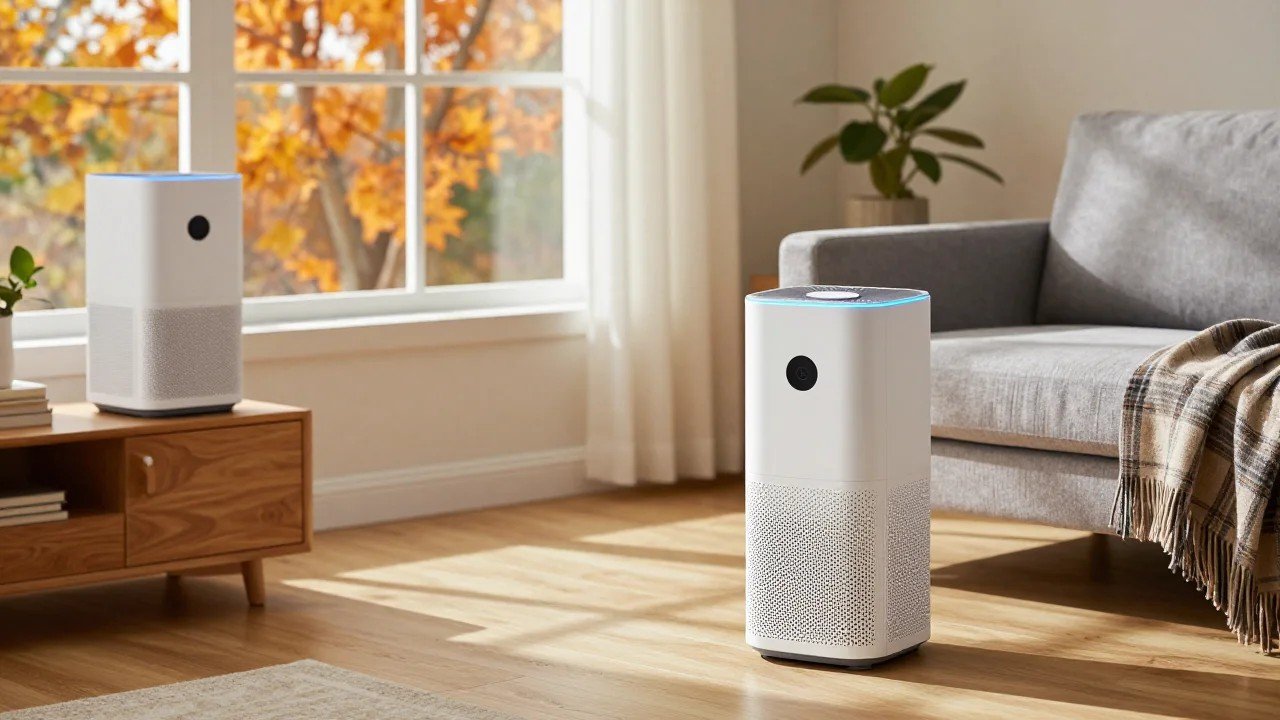
For more than a decade, the Coway Mighty was the default answer to “which air purifier should I get?” The Mighty2 is its successor, and in 2026 it’s earned top-pick status in major independent testing thanks to strong smoke and fine-particle removal, quiet low speeds you can sleep next to, good energy efficiency, and simpler upkeep. It keeps the same compact, round-cornered tower shape that fits beside a couch or bed without dominating the room.
Who it’s for: Anyone who wants one purifier for a living room, bedroom, or home office and doesn’t want to think about it again. Watch for: Replacement filter cost over time, and check which version you’re buying if you want app control.
Check the Coway Airmega Mighty2 on Amazon
2. Coway Airmega AP-1512HH Mighty: Best Proven Runner-Up
The original Mighty hasn’t gotten worse just because it has a successor. It still clears dust, pollen, and smoke quickly in a medium-to-large room, runs quietly on its lower settings, and has an auto mode driven by an air-quality sensor with a simple color light. Its biggest advantage now is price: it’s frequently discounted, and replacement filters are easy to find from Coway and third parties.
Who it’s for: Value shoppers who want proven performance and don’t need an app. Watch for: The carbon layer is thin, so it’s not the best choice for heavy cooking or pet odors.
Check the Coway AP-1512HH on Amazon
3. Blueair Blue Pure 311i Max: Best for Large Rooms and Quiet Operation
Blueair’s cylindrical Blue Pure line moves a lot of air quietly, and the 311i Max is the sweet spot for larger bedrooms, family rooms, and open kitchens. It pulls air in through a washable fabric pre-filter sleeve (available in colors, so it looks less like an appliance), has an auto mode, a filter indicator, and app control. It’s one of the easiest purifiers to live with day to day. If you need even more coverage, step up to the Blue Pure 211i Max.
Who it’s for: Bigger rooms, light sleepers, and anyone who wants app control without a busy design. Watch for: It can get noticeable on its top speed, and yearly filter costs add up.
Check the Blueair Blue Pure 311i Max on Amazon
4. Levoit Vital 200S: Best for Bedrooms and Pets
The Vital 200S is the purifier we’d put in a bedroom with a cat or dog. It has a washable pre-filter that catches pet hair before it clogs the main filter, optional pet-allergy and odor-focused filter versions, and a light sensor that dims the display and quiets the fan when the room goes dark. The VeSync app adds schedules, filter-life tracking, and Alexa or Google Assistant voice control. It covers a mid-sized room well for the money.
Who it’s for: Bedrooms, pet owners, and smart-home fans on a sensible budget. Watch for: It’s not built for big open-plan spaces; buy two or step up to a larger model for those. If you like the Levoit ecosystem, our Levoit air purifier for allergies and pet hair review covers a cheaper option in more detail.
Check the Levoit Vital 200S on Amazon
5. Levoit Core 300: Best Budget Pick for Small Rooms
The compact Levoit Core 300 is the most-recommended cheap purifier for a reason. It punches above its size in small bedrooms, nurseries, dorm rooms, and home offices, it’s quiet on low, and its filters are inexpensive and easy to swap. The Core 300S version adds Wi-Fi, an air-quality sensor, and app control if you want auto mode.
Who it’s for: Small rooms and tight budgets. Watch for: It won’t keep up in a large living room, and the basic model has no sensor or auto mode.
Check the Levoit Core 300 on Amazon
6. Winix 5510 / 5500-2: Best for Smoke and Odors
If wildfire smoke, a smoker nearby, cooking smells, or a litter box are the problem, carbon matters as much as HEPA. Winix’s 5500-series uses a thick pelleted activated-carbon filter alongside a True HEPA filter, which is why it consistently scores well on smoke and odor removal in testing. The 5510 adds app control; the 5500-2 is the simpler, often cheaper version. Both have an air-quality sensor and an auto mode. They also include an optional ionizer (“PlasmaWave”), which you can switch off if you prefer.
Who it’s for: Smoke-prone areas, strong household odors, and allergy sufferers who want a lot of filtration per dollar. Watch for: A slightly boxier look than Coway or Blueair.
Check the Winix 5510 on Amazon
7. Coway Airmega ProX: Best for Open-Plan and Extra-Large Spaces
The ProX is a big, heavy machine built to clean large open floor plans, basements, and great rooms that would overwhelm a typical tower. Independent testing puts it at the top for extra-large spaces on both high and low speeds, with a certified HEPA filter, carbon filter, and washable pre-filter.
Who it’s for: Large open living spaces or anyone who’d rather run one powerful unit than two medium ones. Watch for: It’s heavy and pricey, so it’s overkill for a normal bedroom.
Check the Coway Airmega ProX on Amazon
8. Shark NeverChange Air Purifier: Best Low-Maintenance Alternative
Shark’s NeverChange line is built around a long-life HEPA filter that Shark rates for years rather than months, with a washable pre-filter you rinse occasionally. If filter subscriptions annoy you, that’s the appeal. It’s a reasonable pick for fumes and everyday dust, though it costs more upfront than the Levoit or Winix models.
Who it’s for: People who hate buying replacement filters. Watch for: Higher upfront price; compare long-term cost against a cheaper unit plus filters. We also looked at Shark’s other smart purifiers if you want app features.
Check the Shark NeverChange on Amazon
How to Choose the Right Air Purifier
1. Size it by CADR, not by “up to” square footage
CADR (Clean Air Delivery Rate) measures how many cubic feet of filtered air a purifier delivers per minute for smoke, dust, and pollen. Look for the AHAM Verified seal. A simple rule: for a room with 8-foot ceilings, the smoke CADR should be at least two-thirds of the room’s square footage. A 300 sq ft room wants a smoke CADR of about 200 or higher. Marketing claims like “covers 1,500 sq ft” usually assume only one air change per hour, which isn’t enough for allergies or smoke.
2. True HEPA plus real carbon
A True HEPA filter traps at least 99.97% of particles at 0.3 microns, which covers pollen, dust, pet dander, and smoke particles. “HEPA-type” or “HEPA-style” filters can still work well, but rely on independent test results rather than the label. For odors and smoke gases (VOCs), you need activated carbon; a thick pelleted carbon bed (like Winix’s) beats a thin carbon-coated mesh.
3. Noise you can live with
You’ll only get the benefit if you leave it running. Most people turn a loud purifier down to its lowest setting, so check how well a model cleans on low or medium, not just on max. For bedrooms, a sleep mode that dims lights is worth having.
4. Yearly filter cost
Before you buy, look up the price of replacement filters and how often they need changing (typically every 6–12 months). A cheap machine with expensive filters can cost more over three years than a pricier one with cheap filters.
5. Smart features (nice, not essential)
App control, schedules, filter alerts, and Alexa or Google voice control are genuinely convenient, but a good built-in air-quality sensor and auto mode matter more. If your favorite model isn’t Wi-Fi, a smart plug can add schedules and voice on/off (set the purifier’s power button to stay on after a power cut).
6. Avoid ozone
Skip “ozone generators” sold as air purifiers. Ozone irritates the lungs. Ionizers on reputable models are typically certified to low emissions and can be turned off, which is what we recommend if you’re sensitive.
Air Purifier vs Humidifier: Do You Need Both?
They solve different problems. An air purifier removes particles and odors; a humidifier adds moisture to dry winter air. Many homes benefit from both once the heat comes on. If dry skin, static, or nosebleeds are your issue, see our best smart humidifier 2026 guide. Keep them a few feet apart, and use distilled water in ultrasonic humidifiers so white mineral dust doesn’t load up your purifier’s filter.
Where to Put Your Air Purifier
- Put it in the room where you spend the most time, usually the bedroom.
- Leave at least a foot or two of open space around the intake and outlet; don’t tuck it behind a couch.
- Keep doors and windows closed while it runs, especially during smoke events.
- Run it continuously on auto rather than switching it on only when the air feels bad.
FAQ: What People Ask About Air Purifiers
Do air purifiers actually work?
Yes, for airborne particles. A properly sized HEPA purifier significantly reduces dust, pollen, pet dander, and smoke particles in the room it’s in. It won’t remove dust that has already settled on surfaces, so regular vacuuming still matters.
What size air purifier do I need?
Use the smoke CADR: aim for at least two-thirds of your room’s square footage (with 8-foot ceilings). For allergies, asthma, or smoke, size up so you get about four to five air changes per hour.
Should I run my air purifier 24/7?
Yes. Running it continuously on auto or a low setting keeps particle levels down. Modern purifiers use about as much power as a light bulb on low settings.
Are air purifiers good for allergies?
A True HEPA purifier in the bedroom is one of the most effective steps for pollen, dust mite debris, and pet dander allergies. Pair it with washing bedding in hot water and keeping pets out of the bedroom if possible.
Do air purifiers help with wildfire smoke?
Yes. A HEPA filter captures fine smoke particles (PM2.5), and a solid carbon filter helps with the smell. Close windows, run the purifier on high, and choose a model with a strong smoke CADR such as the Winix 5510 or Coway Mighty2.
Do air purifiers remove pet odors?
Only models with substantial activated carbon do a good job. Look for pelleted carbon or a dedicated odor/pet filter (like Levoit’s pet versions or the Winix 5500-series).
How often should I change the filter?
Typically every 6 to 12 months for HEPA and carbon filters, sooner in smoky or dusty homes or with pets. Wash or vacuum the pre-filter every few weeks. Use the filter indicator as a guide.
Is a Coway or Levoit better?
Coway’s Mighty models generally clean faster and more quietly for their size and are top picks in independent testing. Levoit wins on price and smart-app features, especially for small rooms and bedrooms. Choose Coway for performance, Levoit for value and app control.
Bottom Line
For most US homes, the Coway Airmega Mighty2 is the best air purifier you can buy in 2026, with the original Coway AP-1512HH as a cheaper, proven alternative. Go Blueair Blue Pure 311i Max for big, quiet rooms, Levoit Vital 200S for bedrooms and pets, Levoit Core 300 for small spaces on a budget, and Winix 5510 for smoke and odors. Size by CADR, budget for filters, and leave it running.